
Personal lab · Singapore and Japan
I turn problems into working AI tools, with a team of agents.
It started with an online course on AI agents in July 2025. Seven months later, my own AI assistant was running day and night. Since then, when I hit a problem worth solving, I build the fix with a team of AI agents. These are the results.
アイデアを、動くAIプロトタイプに。
The journey · July 2025 to now
Six builds, oldest first.
Six tools I built and use myself, and what each one taught me.

Project 01 / 06 · Feb 2026 · AI assistant
Sky is my personal AI assistant, running on a server I control.
Always oneven when my laptop is closed
The problem
I wanted an assistant that's always there and remembers what we talked about.
What I built
An AI I message in chat. It runs routine jobs on a schedule and keeps a list of what's waiting on me.
Learned →Running your own AI means owning the boring parts too, like backups that really restore.
Hermes · My own server · Claude Code · Codex
Project 02 / 06 · Jun 2026 · AI memory
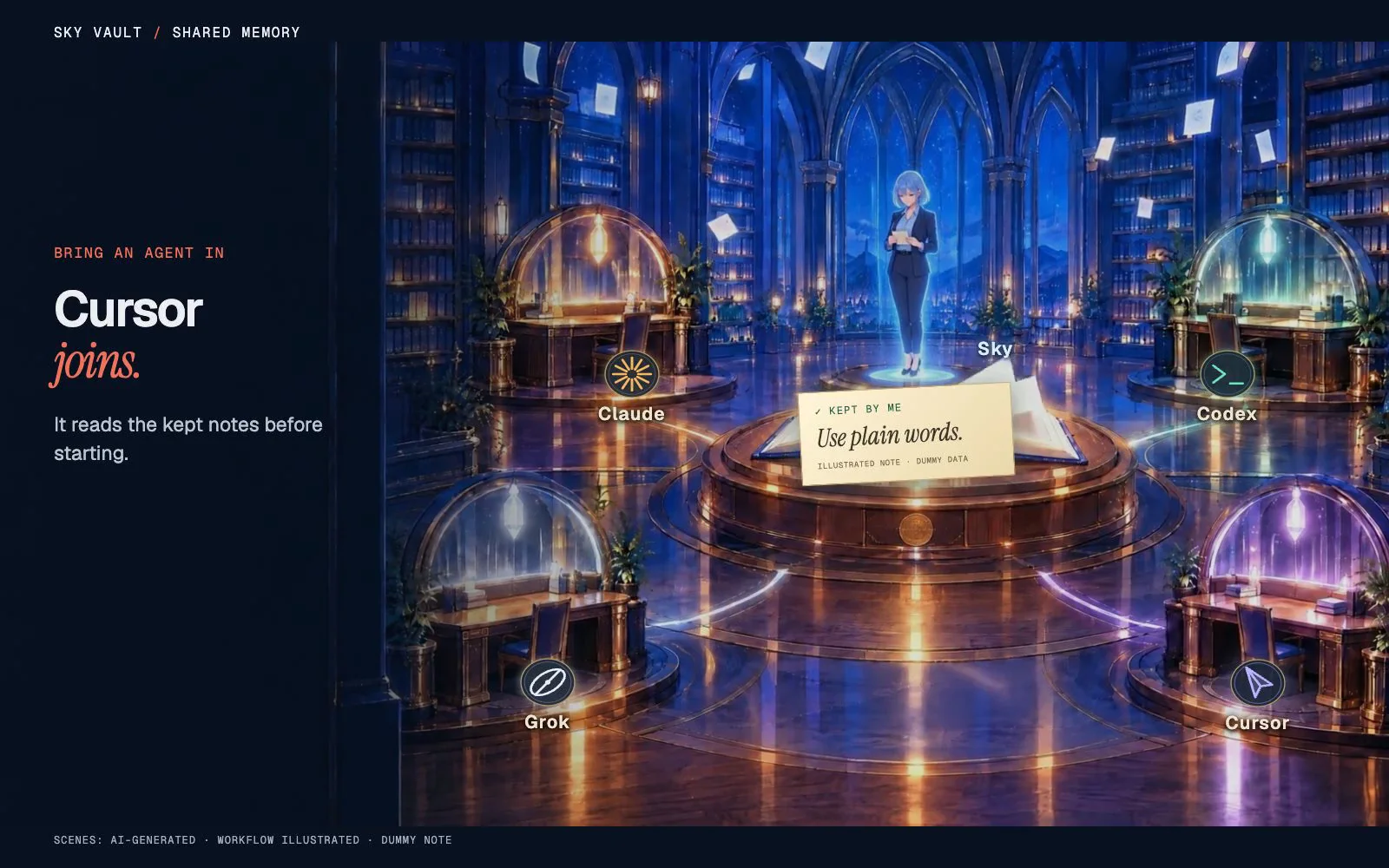
Sky Vault gives my AI agents one shared memory, even as the team changes.
One memoryfor Claude, Codex, Grok, Cursor and Sky, and I decide what stays in it
The problem
Each AI was learning the same things about me and my projects, separately.
What I built
A shared notebook of plain notes. The agents suggest additions; only the ones I approve stay.
Learned →AI remembers better when it suggests and a person decides.
Obsidian · Markdown · Git · Sky · Claude · Codex · Grok · Cursor
Project 03 / 06 · Jun–Aug 2026 · Desktop app
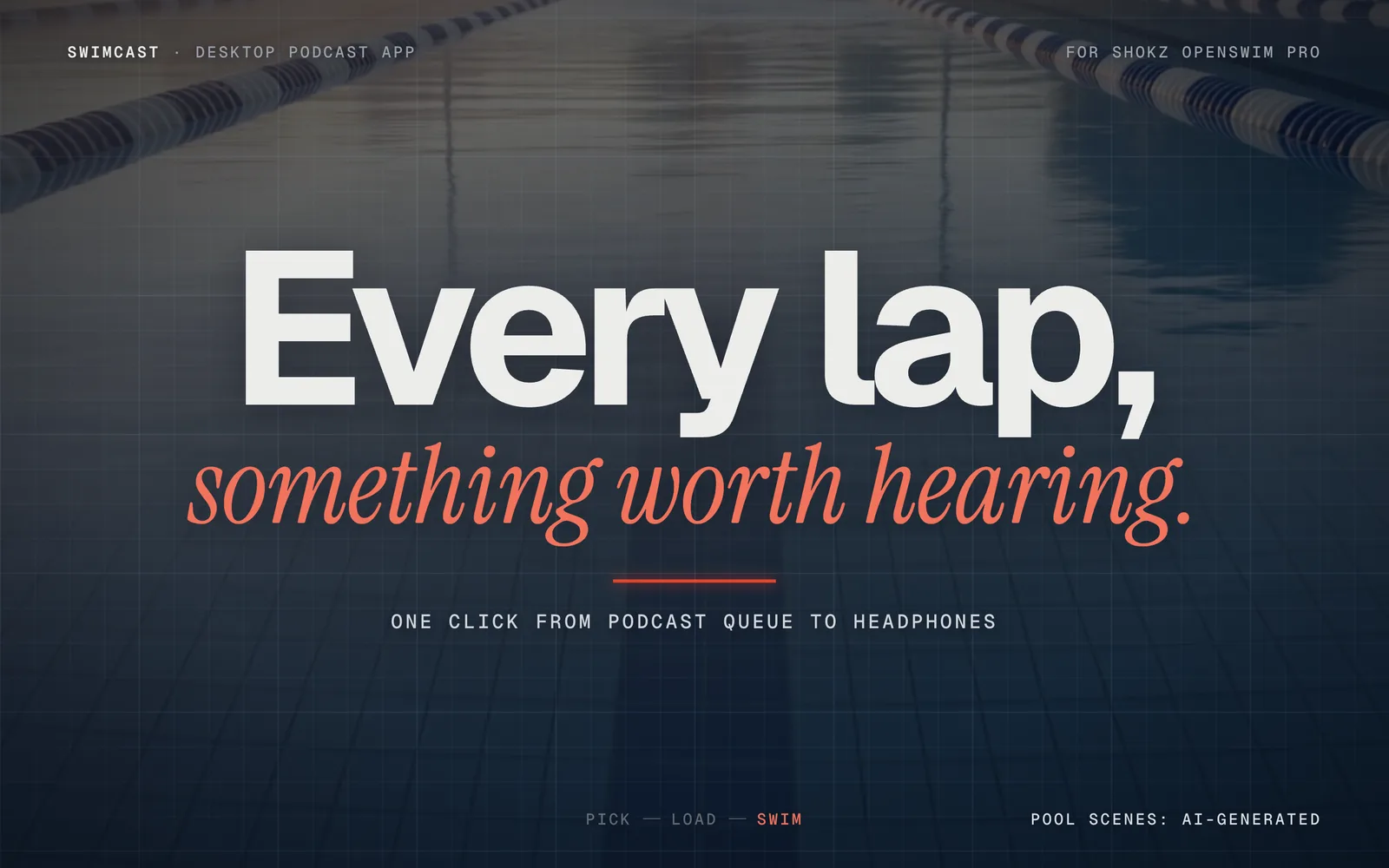
SwimCast loads a swim's worth of podcasts onto my waterproof headphones.
One clickfrom podcast queue to headphones, ready for the pool
The problem
Loading podcasts onto swim headphones was the worst part of swimming with them.
What I built
My own version of an open-source podcast app that does the loading for me, sped up and evened out in volume.
Learned →AI can help you ship a real app, but the risky parts still deserve a second look.
Tauri · React · TypeScript · Claude Code · Codex

Project 04 / 06 · Jul 2026 · Tracker
Property Watcher reads every new property listing and tells me only about the ones that fit.
No noiseSky messages me only when a place fits what I'm looking for
The problem
Listing alerts are noisy, and I kept losing track of places I'd already seen.
What I built
A tracker where AI reads each listing, clear rules score it, and every place gets its own file.
Learned →Let AI read the messy stuff, but keep the final call in rules you can check.
Python · SQLite · Claude · Sky · Grok Bot · Notion

Project 05 / 06 · Sep–Oct 2026 · AI teamwork
Agent OS is the rulebook my AI agents follow when they hand work to each other.
No blind handoversevery agent checks the last one's work before building on it
The problem
When several AIs work at once, the risk is one trusting another's unchecked work.
What I built
A shared rulebook and a handover note for every task: the goal, what was checked, and who's next.
Learned →When AIs work as a team, the handover matters more than any single answer.
Claude · Codex · Cursor · Sky · Sky Vault

Project 06 / 06 · Oct 2026 · Mac app
Quest Board answers “where was I?” across every AI tool I use.
Five apps, one screenevery unfinished project in one place, with a button to jump back in
The problem
Getting back into a project meant digging through five AI apps for the right conversation.
What I built
A board on my Mac that turns every AI conversation into a quest I can pick up again.
Learned →Plan it and write the tests first, and a team of AI agents can build a working app overnight.
Python · SQLite · A local AI model · Claude Code · Codex
Live experiment · Paper trading only
Paper Desk. No real money.
My longest-running experiment, since April 2026. An AI agent runs a paper portfolio of large US stocks, picking them by a fixed set of rules and adjusting once a month. Two more agents are in design. The safety rules came first: an off switch, no code runs unless I have reviewed it, and an alert if the portfolio falls too far.
Paper trading only · No real money · Not investment advice · Delayed snapshot · date shown below
Loading the desk…
Desk data is unavailable right now. Nothing is shown rather than guessing.
How I work
A real problem, a team of agents.
I pick a problem I actually have and build the fix with AI agents. They write the code, test it and check each other's work; I decide what ships. Each project leaves me with a tool I understand properly, and habits I carry into the next one. The AI tools I use most are Claude Code, Codex and Cursor.
Questions
Fair questions, short answers.
Is this a business?
No. It's a personal learning lab. I'm not offering services.
Are the projects real?
Yes. Each one is something I use. The screenshots and mockups use dummy data, and each caption says so.
Is Paper Desk investment advice?
No. It's an experiment that trades on paper only, with no real money. Nothing on this site is investment advice.
Follow along
What I learn, as I go.
I share what I built, what broke, and the tech worth knowing about.